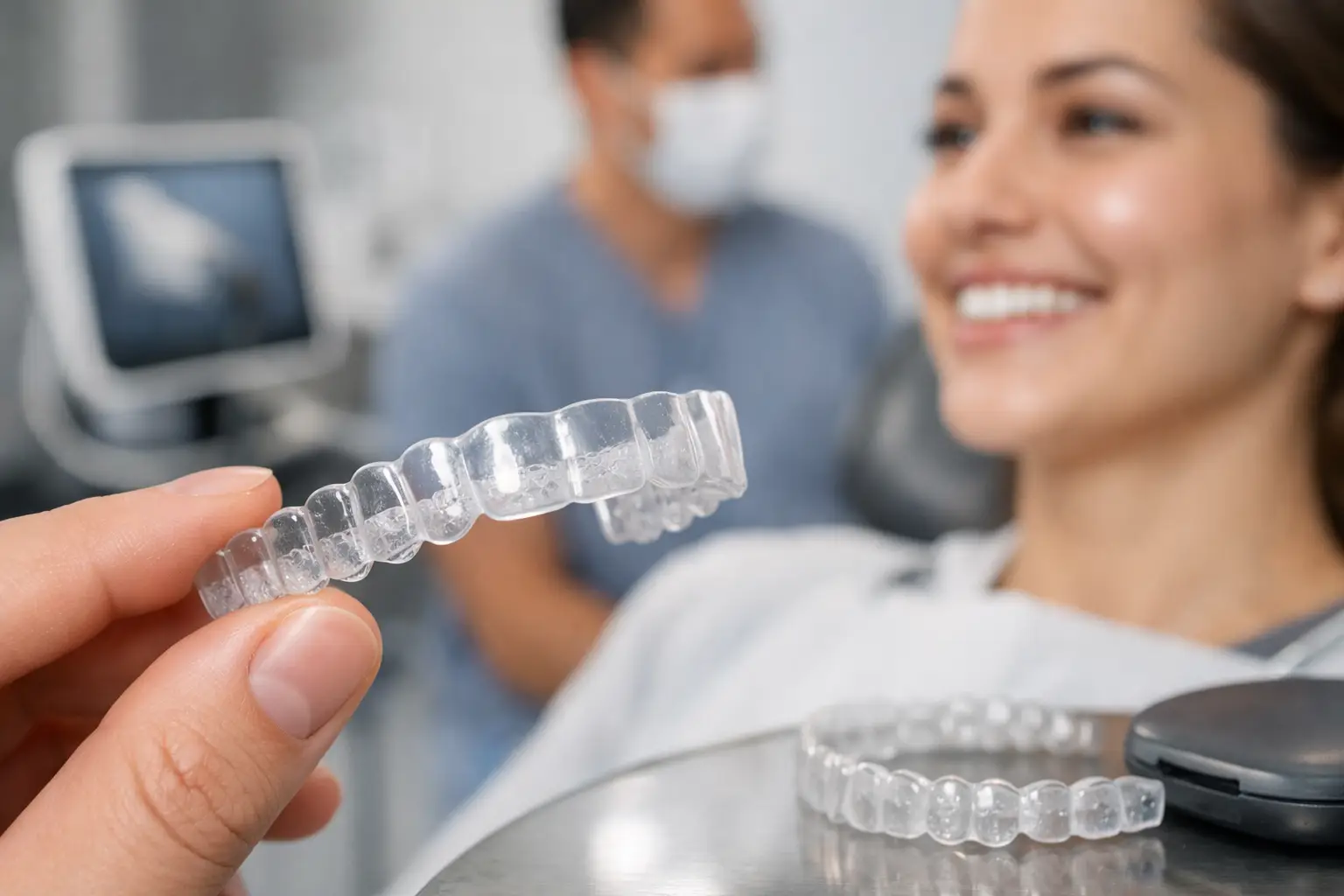

A case starts well on the screen, the first trays track, and then progress slows. One arch advances faster than the other. Seating becomes inconsistent. Refinements begin to stack up. That gap between digital plan and biological response is exactly where clear aligner technology advantages matter most - not as marketing claims, but as measurable gains in control, efficiency, and predictability.
For clinicians, the value of aligner therapy is no longer just esthetics and removability. The real differentiator is how well a system can translate planned movement into actual movement while keeping treatment on schedule. For patients, the benefits are simpler but just as critical: fewer surprises, better comfort, and a shorter path to the finish line when everything tracks as intended.
Why clear aligner technology advantages matter in real treatment
Clear aligners have matured from a niche cosmetic option into a core orthodontic modality. That growth has raised the bar. Patients expect convenience and appearance benefits, but providers need more than that. They need dependable force delivery, consistent seating, and workflows that reduce delay rather than create new points of failure.
This is where clear aligner technology advantages become clinically meaningful. The best advances do not just make trays look better or feel thinner. They improve how force is expressed, how movement is synchronized, and how treatment plans perform in the mouth compared with the digital setup.
That distinction matters because aligner success is rarely defined by the first few stages. It is defined by what happens mid-course, when biology, compliance, occlusion, and attachment performance start to influence outcomes. Technology that improves those variables has a direct effect on case efficiency.
1. Better force application improves tracking
One of the biggest strengths of modern aligner therapy is controlled incremental movement. But incremental does not always mean effective. If an aligner is not fully seated or if force dissipates unevenly, planned movement can stall long before it becomes obvious in the chart.
Improved force application is one of the clearest advantages in advanced aligner protocols. When force is directed more consistently, teeth are more likely to follow the programmed sequence instead of drifting off track. That reduces the frequency of mid-treatment corrections and helps preserve the integrity of the original setup.
For clinicians, this means fewer situations where a technically sound plan underperforms because the mechanics in the mouth are less reliable than expected. For patients, it means progress that feels steadier and more predictable.
2. Easier aligner seating supports better outcomes
An aligner cannot do its job well if it is not seated fully and repeatedly. This sounds basic, but poor seating is behind a surprising number of tracking issues. Even small discrepancies can compound across stages, especially in cases with rotations, extrusion demands, or more complex arch coordination.
One of the practical clear aligner technology advantages is the ability to improve tray engagement from the start and maintain that engagement throughout treatment. Better seating helps planned forces reach the intended teeth at the intended time. It also gives clinicians a more reliable sense of whether a case is progressing as designed.
There is a patient benefit here as well. When trays fit more decisively, wear tends to feel more purposeful. Patients are often more confident in the process because they can tell the appliance is engaging rather than floating or rocking.
3. Treatment acceleration can reduce total case time
Speed gets attention, but acceleration in orthodontics only has value if it does not trade away control. The real goal is not fast movement for its own sake. It is efficient movement that preserves tracking and reduces unnecessary extensions.
When aligner treatment is supported by technology that improves force expression and seating, many cases can progress with fewer interruptions. That can shorten total treatment time by reducing lag between planned stages and actual biologic response. It can also lower the need for repeated refinements, which is often where treatment time expands beyond the original estimate.
Not every case accelerates at the same rate. Case complexity, patient compliance, periodontal status, and treatment objectives all affect timing. Still, when the mechanics are more efficient, clinicians gain a stronger chance of keeping the case aligned with its schedule rather than constantly recovering lost ground.
4. Jaw synchronization strengthens case control
One of the less discussed but more significant challenges in aligner therapy is uneven progress between the upper and lower arches. When one arch advances faster than the other, occlusal relationships can become harder to manage. That may affect staging decisions, delay finishing, and increase the likelihood of additional adjustments.
Technology that supports jaw synchronization addresses a problem many providers see but do not always have a simple way to manage. Coordinating upper and lower progress helps preserve the logic of the treatment sequence. It improves the clinician’s ability to maintain control over occlusion while moving through the planned stages.
This is especially relevant in cases where precision matters across both arches at the same time. If synchronization is weak, treatment can become reactive. If synchronization is strong, treatment becomes more deliberate. That difference shows up in efficiency, finishing quality, and confidence at each review appointment.
5. Greater predictability reduces refinements
Refinements are part of aligner therapy, but too many refinements signal lost efficiency. They consume chair time, extend treatment, and can frustrate patients who believed they were close to completion.
A major advantage of better aligner technology is increased predictability. Predictability does not mean every tooth responds perfectly in every patient. Orthodontics is still biologic treatment. What it does mean is a tighter relationship between the digital plan, the appliance mechanics, and the clinical result.
When tracking, seating, and force delivery improve together, the treatment plan is more likely to perform as intended. That narrows the gap between simulation and reality. In practical terms, it means fewer avoidable detours and a more efficient path to finishing.
For high-volume aligner providers, this matters even more. Small gains in predictability across many cases translate into meaningful improvements in scheduling, profitability, and patient satisfaction.
6. Integration with existing aligner systems protects workflow
Adoption barriers are real. Even if a new tool promises better outcomes, most clinicians will hesitate if it requires abandoning their preferred aligner brand, retraining the entire team, or rebuilding the digital workflow from scratch.
That is why compatibility is one of the most commercially relevant clear aligner technology advantages. A solution that works alongside established aligner systems is easier to evaluate, easier to implement, and easier to scale across a practice. It enhances the existing protocol instead of replacing it.
From an operational standpoint, this matters as much as clinical performance. Providers want innovation that fits into daily treatment, not innovation that creates friction. The strongest technologies are the ones that improve results while respecting the reality of practice workflows, vendor relationships, and case planning habits.
This is where add-on appliance strategies stand out. When a technology layer can accelerate movement, improve seating, and support synchronization without forcing a provider to switch aligner ecosystems, adoption becomes a practical decision rather than a disruptive one.
7. A better patient experience supports compliance
Clinical mechanics and patient behavior are inseparable in aligner therapy. Even the best-designed treatment plan depends on consistent wear. If the experience feels vague, frustrating, or prolonged, compliance becomes harder to maintain.
Better-fitting trays, more visible progress, and shorter treatment timelines can all strengthen patient engagement. Patients may not describe this in technical terms, but they notice when treatment feels controlled. They notice when trays seat well, appointments stay on track, and the finish line appears credible rather than constantly moving.
That experience matters for practices as much as it does for patients. Better compliance supports better outcomes. Better outcomes support stronger case acceptance, better reviews, and more confidence when recommending aligner therapy to future patients.
Where the advantages depend on case selection
No technology removes the need for sound diagnosis and case planning. Some movements remain more challenging in aligners than in fixed appliances, and some patients will always require closer monitoring or a hybrid strategy. The presence of advanced technology improves the odds of success, but it does not override biologic limits or poor compliance.
That is why the smartest way to view these advantages is as force multipliers. They do not replace clinical judgment. They make good clinical judgment more effective. In straightforward cases, that may show up as smoother progression and shorter treatment. In more demanding cases, it may show up as better control and fewer surprises.
For providers who want stronger aligner performance without changing the foundation of their workflow, that is a meaningful shift. SyncSplint reflects this direction - an integration-minded approach focused on acceleration, synchronized movement, easier seating, and more predictable case progression.
The future of aligner therapy will not be defined by who can produce the most trays. It will be defined by who can create the most controlled, efficient, and clinically dependable treatment process. That is where the real advantages live, and that is where better outcomes begin.

