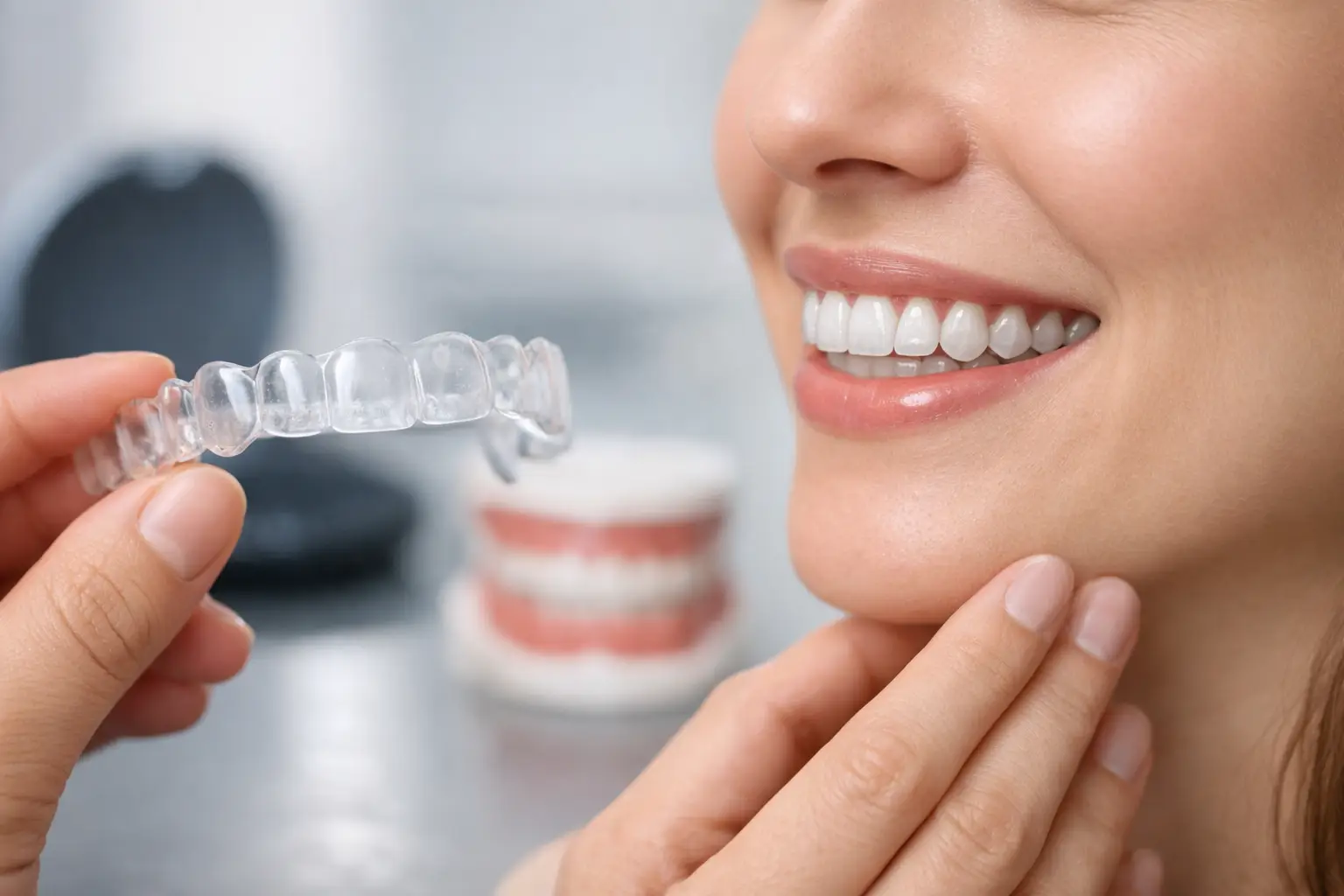

A tray that looks passive can still fail actively. When aligners stop tracking, seat poorly, or lose force efficiency, treatment slows down fast. If you are asking how to make aligners work better, the real answer is not one trick. It is a set of clinical decisions that improve seating, force expression, compliance, and coordination across the full treatment sequence.
For providers, that means fewer avoidable refinements and more predictable progress. For patients, it means trays that fit more securely, teeth that move on schedule, and treatment that feels less like guesswork. The best results come from tightening the system around the aligner, not just switching brands or asking for more wear time.


How to make aligners work better in real cases
Clear aligners perform well when the biology, the appliance, and the protocol stay in sync. Most failures happen when one of those elements drifts. A plan may be sound on screen, but intraoral reality changes quickly if seating degrades, if the upper and lower arches progress at different rates, or if force delivery becomes inconsistent from tray to tray. That is why aligner optimization should be viewed as a control problem. Better outcomes usually come from improving fit, stabilizing force application, and reducing the gap between planned movement and actual movement. The smaller that gap, the fewer delays you see later. In simple terms, aligners work better when they seat fully, engage attachments as designed, and maintain consistent activation over the recommended wear period. If any of those fail, the tray is still in the mouth, but its efficiency drops.Start with fit, because fit drives force
Poor seating is one of the fastest ways to lose aligner performance. If the aligner does not fully engage the dentition, programmed movements become partial movements. Rotations underperform, extrusion becomes less reliable, and tracking errors compound from one stage to the next. This is why insertion should not be treated as a routine handoff. Providers should verify intimate fit at delivery and monitor whether the patient can reproduce that fit consistently at home. Small air gaps around cusp tips or incisal edges may look minor, but they often signal compromised force expression. Patients can help by seating trays fully every time they insert them and by avoiding casual wear that leaves the aligner floating instead of adapted. Chewing devices may help in some cases, but they are only part of the answer. If repeated seating effort is required, the issue may be less about habit and more about the mechanics of the case. A better-fitting support appliance can make a measurable difference here. When the goal is improved engagement and more reliable force transfer, adjunctive systems that enhance aligner seating can strengthen performance without forcing the clinician to abandon the existing aligner platform.Wear time matters, but precision matters more
Patients are often told the same thing first: wear the trays as prescribed. That advice is correct, but incomplete. High wear time with inconsistent seating still produces inconsistent results. The clinical objective is not simply hours in the mouth. It is effective wear time, where the aligner is fully engaged and expressing the intended movement. This matters in mixed-compliance cases. Some patients are motivated but not precise. They remove trays frequently, reinsert them quickly, and assume total hours are all that count. Others wear aligners faithfully but progress unevenly because one arch tracks differently from the other. Both scenarios create hidden inefficiency. For providers, the practical takeaway is to assess compliance through fit and progression, not just self-reported hours. If a patient says they are compliant but tracking says otherwise, the protocol needs refinement. Better instructions, better seating, and better arch coordination usually outperform generic reminders.Attachments, staging, and force control still decide the case
When clinicians ask how to make aligners work better, the answer often sits upstream in treatment design. Some movements simply demand more control than an aligner alone can provide at a given stage. If staging is too aggressive or attachment strategy is too light, the tray may lose grip before the movement is expressed. This does not mean every difficult case requires a new system. It means the system needs to be respected. Large rotations, root movement, extrusion, and complex bite changes all require disciplined force management. Overloading one stage can save time on paper and cost time in refinement. A more controlled approach often wins. Smaller, more biologically realistic increments can improve tracking and reduce midcourse correction. The trade-off is that slower staging may appear less aggressive upfront. In practice, it can shorten total treatment time by avoiding derailment. This is where adjunctive innovation becomes clinically useful. A compatible enhancement appliance can improve force application and tray adaptation while preserving the doctor's preferred aligner workflow. That kind of integration matters because efficiency is only valuable if it fits daily practice.Jaw synchronization is the missed variable
One of the most overlooked reasons aligner treatment stalls is unsynchronized progress between the upper and lower arches. A case may appear to track in each arch independently, yet the occlusal relationship drifts because one arch is advancing more effectively than the other. Once that happens, aligner fit, bite settling, and movement predictability can all suffer. Jaw synchronization is not a cosmetic detail. It is a performance variable. If upper and lower progress diverge, the clinician may start troubleshooting symptoms instead of the cause. Seating problems, posterior open bite tendencies, or delayed settling may all reflect incomplete coordination rather than isolated tray issues. Improving synchronization can strengthen the entire case. It supports more controlled progression, helps maintain treatment momentum, and reduces the need to compensate later. For practices managing a high volume of aligner patients, this is one of the clearest paths to greater predictability.How to make aligners work better without changing systems
Many practices assume better performance requires changing aligner brands or overhauling workflows. Usually, it does not. In many cases, the smarter move is adding a universal enhancement layer that improves what the current system is already trying to do. That approach is especially attractive for providers who value operational continuity. Staff training stays intact. Existing digital workflows remain usable. Patients continue with a familiar clear aligner format. What changes is the level of control around force delivery, tray seating, and coordinated progression. This is where a product like SyncSplint fits naturally. It is designed to work alongside major aligner systems, helping accelerate tooth movement, improve force application, and synchronize upper and lower jaw treatment progress. For clinicians focused on reducing treatment time without sacrificing predictability, that is a practical upgrade, not a disruptive one.Better patient behavior starts with better clinical framing
Even the most advanced protocol still depends on patient execution. But patient behavior improves when instructions are specific, visual, and tied to outcomes. Telling a patient to wear trays more is weaker than showing them what full seating looks like and explaining how poor seating delays finishing. Adults usually respond to efficiency. Teens often respond to milestones and visible progress. In both groups, clarity matters more than repetition. When patients understand that fit, seating, and timing directly affect how fast they finish, compliance becomes easier to earn. Clinicians should also set expectations around discomfort, tray changes, and adaptation. If patients mistake normal pressure for a problem, they may under-wear a tray during the exact period when force expression matters most. Better education protects the protocol.Watch for the signs that aligners are losing efficiency
Most aligner problems announce themselves early. Small gaps, attachment mismatch, unexpected mobility patterns, or uneven arch progress are not minor cosmetic issues. They are signals that force is not being delivered as planned. The key is acting before those signals become full refinements. Waiting usually makes the case more expensive in time and chairside effort. Earlier intervention may involve revising wear instructions, extending a tray, improving seating protocols, or adding an adjunctive appliance to restore control. There is no single rule for every patient. Some cases respond to stricter monitoring. Others need mechanical support. The point is to treat aligner inefficiency as a solvable systems problem, not an unavoidable part of clear aligner therapy. The future of aligner treatment belongs to practices that think beyond the tray itself. Better results come from better control, better synchronization, and better integration. When you improve those variables, aligners do not just fit better - they perform better, and patients feel the difference where it matters most: in faster, more predictable progress.