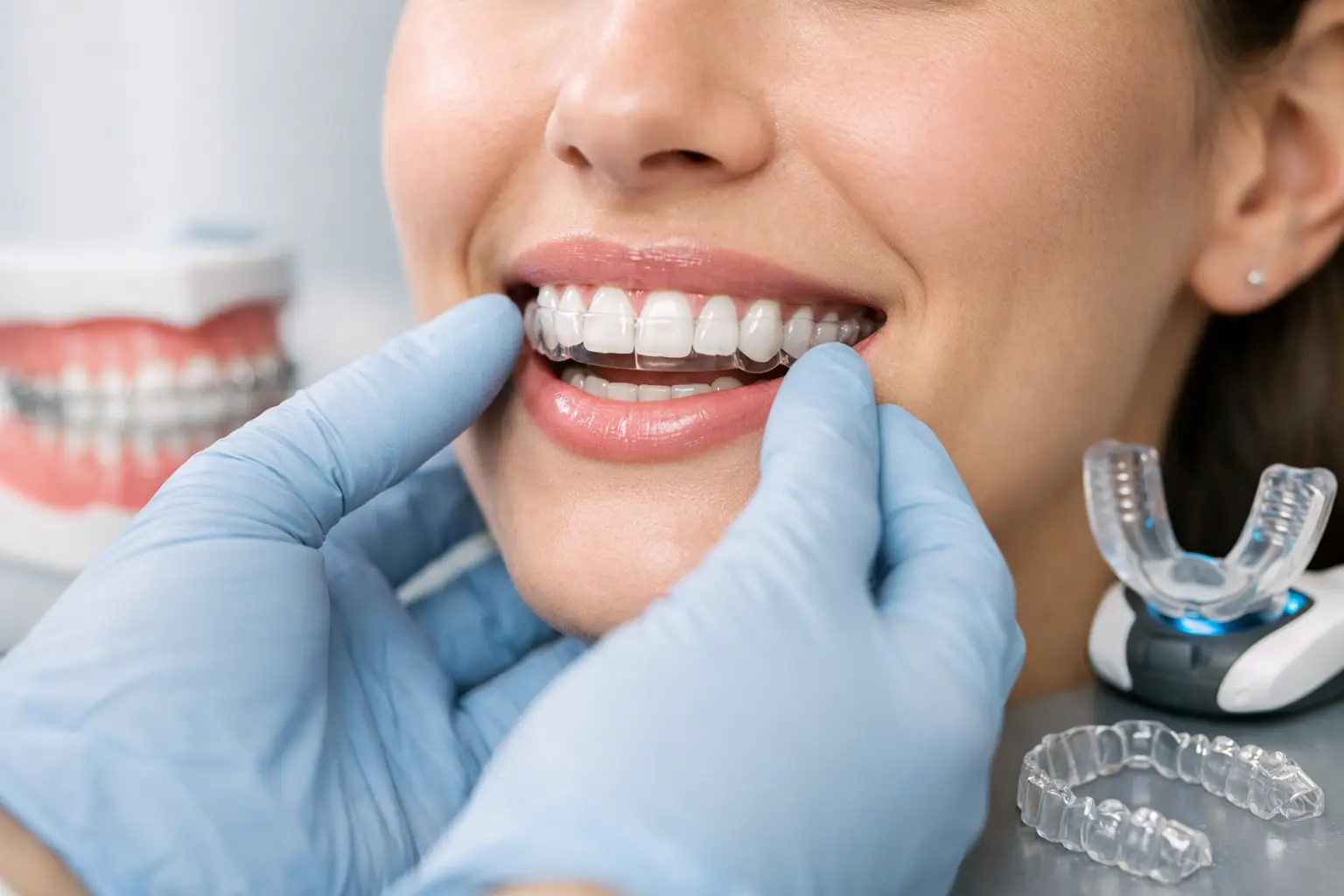

Every aligner case looks efficient on the treatment plan. The real test starts when biology, compliance, and staging meet the chair. An orthodontic appliance for faster results matters because speed alone is not the goal - controlled movement, reliable tracking, and synchronized progress are what actually shorten treatment.
For clinicians, that distinction is critical. Cases do not run long just because teeth move slowly. They run long because upper and lower arches fall out of sync, aligners stop seating fully, force expression becomes inconsistent, or refinements start stacking up. A true acceleration strategy has to improve the mechanics behind the timeline, not just promise a shorter one.


What makes an orthodontic appliance for faster results actually work
The phrase gets used loosely, but not every appliance that claims to accelerate orthodontics improves treatment efficiency in a meaningful way. Faster treatment is the output. The input is better force delivery, better seating, and better coordination across the case. In clear aligner therapy, that is especially important. Aligner systems are highly effective when the tray fits, the programmed movement is biologically realistic, and the patient stays on schedule. But when one of those variables slips, treatment can drift. An auxiliary appliance that improves how force is applied and maintained can help bring the case back to a more predictable path. That is why the best add-on solutions are not trying to replace aligners. They are designed to strengthen aligner performance. For an orthodontist or dentist already invested in a preferred aligner workflow, the practical question is simple: can this appliance improve movement without forcing a change in system, lab relationship, or clinical protocol?Why clear aligner cases stall even with good planning
Most delays in aligner treatment are not mysterious. They are mechanical and biological. The treatment plan may be sound, but the delivery can still lose precision over time. One common issue is incomplete aligner seating. If the tray is not fully adapted, the programmed force is compromised from the start. Another is differential progress between arches. When upper and lower treatment do not advance at the same pace, bite relationships become harder to control and finishing can take longer than expected. There is also the basic reality of patient variation. Two patients can wear aligners the same number of hours and respond very differently. This is where an adjunctive appliance becomes valuable. Not because it overrides biology, but because it helps clinicians manage the variables that often lead to refinement-heavy treatment. Better seating, more effective force transmission, and synchronized progression can reduce the friction points that slow cases down.The clinical advantage of acceleration through control
There is a tendency to talk about speed as if it exists apart from precision. In orthodontics, that thinking creates problems. Movement that happens faster but less predictably can increase midcourse corrections and compromise finishing quality. A better model is acceleration through control. When the appliance supports more consistent force application, aligners can express movements more effectively. When upper and lower arches are progressing in sync, clinicians have more confidence in timing, occlusal management, and staging. When trays seat more completely, there is a better chance the digital plan translates into the mouth with fewer interruptions. That is the reason a product like SyncSplint stands out in the aligner space. Its value is not just that it aims to accelerate treatment. Its value is that it does so in a way that fits directly into existing aligner protocols while improving the underlying mechanics that determine whether a case stays on track.Orthodontic appliance for faster results in real aligner workflows
For busy practices, the appeal of any new device depends on integration. If the appliance requires a complete shift in treatment planning philosophy or forces the clinician to abandon a preferred aligner brand, adoption becomes harder than the clinical promise is worth. That is why compatibility matters. An orthodontic appliance for faster results should work as an enhancement layer, not a system replacement. In practical terms, that means it can be incorporated into current workflows, support digital planning inputs already used by the practice, and complement the aligner brand the clinician trusts. This matters for more than convenience. When a device integrates cleanly, teams are more likely to use it consistently, explain it clearly to patients, and monitor results with confidence. Operational simplicity supports clinical consistency. For providers managing a broad case mix, this flexibility is a real advantage. Some cases need more help with seating and force expression. Others benefit most from better upper-lower synchronization. The right appliance should support those needs without creating unnecessary complexity in ordering, fabrication, or chairside delivery.Better seating means better force expression
Aligner therapy only performs as planned when the tray engages the dentition accurately. Even a well-designed treatment sequence can lose efficiency if seating is inconsistent. Poor adaptation reduces the effectiveness of programmed movements and can introduce small tracking errors that become larger over several stages. An appliance that improves aligner seating can therefore have an outsized effect on treatment timing. It helps the intended force reach the tooth more reliably, which increases the chance that each stage completes as planned. Over time, that can mean fewer stalls, fewer rescue adjustments, and fewer added weeks between review appointments.Jaw synchronization is not a side issue
Upper and lower arch coordination is one of the more overlooked causes of delayed finishing. When one arch advances ahead of the other, clinicians may need to pause progression, rebalance mechanics, or revise staging. None of that is ideal in a system built around sequence and predictability. An appliance that helps synchronize jaw treatment progress offers a strategic benefit. It supports the timing relationship between arches, which can improve bite development and reduce the likelihood of last-phase surprises. For clinicians focused on efficient finishing, that is not a minor feature. It is often the difference between a clean case progression and an extended endpoint.Who benefits most from this type of solution
The strongest candidates are practices already committed to clear aligner therapy and looking to improve consistency without rebuilding their workflow. That includes orthodontists managing complex aligner cases, general dentists offering aligners in a high-volume setting, and clinicians who want stronger control over treatment timing. Patients also feel the benefit quickly when the case stays on track. Adults want fewer delays and a shorter path to the result they were shown at the consultation. Teens benefit from a protocol that reduces avoidable setbacks and keeps momentum high. Faster treatment is appealing, but patients respond even more strongly to predictability. They want to know the process is working. Still, there are trade-offs. No appliance makes every case simple, and no acceleration tool removes the need for sound diagnosis, realistic staging, and patient compliance. Cases with significant biological resistance, inconsistent wear, or complex occlusal goals may still require refinements. The point is not perfection. The point is better control over the factors that commonly extend treatment.What clinicians should evaluate before adopting one
The first question is whether the appliance improves outcomes in a way that is clinically meaningful. Faster movement is attractive, but only if it supports tracking, finishing, and patient experience. The second is whether it integrates with existing aligner systems. A universal solution has a clear advantage because it protects the practice's current workflow and vendor decisions. The third consideration is usability. If ordering, fabrication, and implementation are overly complicated, even a strong concept can underperform in the real world. Practices need solutions that fit chairside reality, not just marketing language. Finally, clinicians should look for a system that supports monitoring and case management, because treatment acceleration without oversight can create just as many problems as it solves.The future of faster aligner treatment
The next phase of orthodontics will not be defined by aligners alone. It will be defined by how intelligently clinicians enhance aligner performance. The market is moving toward integrated tools that improve force application, reduce friction in treatment progression, and give providers more control without asking them to start over. That shift is overdue. Clinicians do not need more disruption. They need better performance from the systems already working in their practices. An orthodontic appliance for faster results is most valuable when it strengthens what clear aligners do well and closes the gap where cases tend to lose momentum. For practices focused on treatment acceleration, predictability, and workflow efficiency, that is the opportunity. Not just moving teeth faster, but moving cases forward with more control from first tray to final fit. That is where shorter treatment times become believable - and where better orthodontic outcomes start to scale.