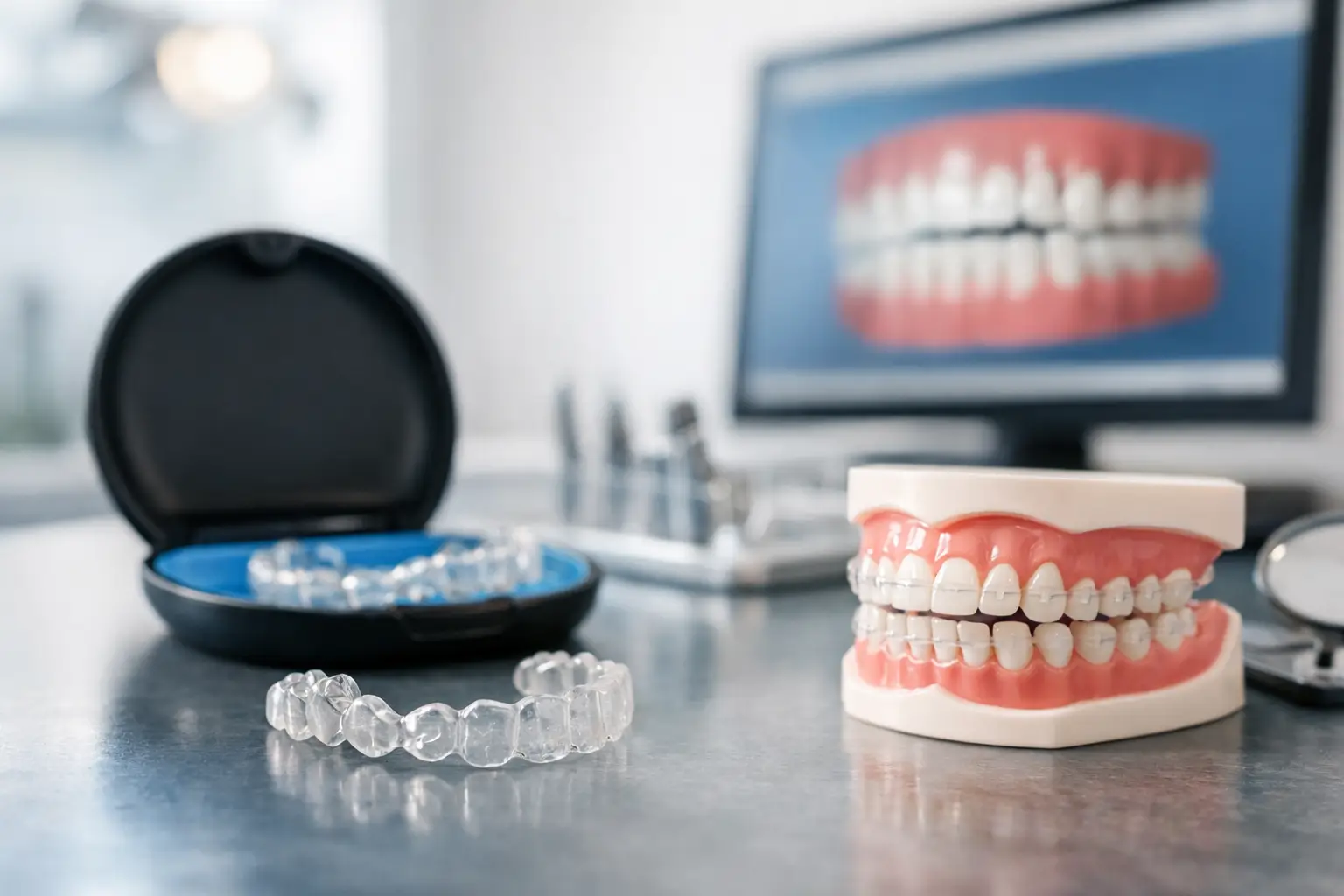

A case looks clean on the digital setup, the trays arrive on time, and the patient is motivated. Then by stage 8, one arch is tracking and the other is drifting, attachments are doing more work than expected, and refinement starts creeping into what should have been a straightforward plan. That gap between virtual intent and clinical reality is where aligner case predictability is won or lost.
For clinicians, predictability is not a vague quality metric. It is operational. It affects chair time, number of refinements, attachment revisions, patient confidence, and overall treatment efficiency. The more reliable the system is from planned movement to actual movement, the more control you keep over treatment timing and outcomes.


Why aligner case predictability breaks down
Most aligner failures are not true failures of planning. They are failures of force expression, seating, biologic response, or timing between arches. Digital treatment plans can model ideal motion with impressive precision, but plastic still has to deliver that motion in the mouth under real conditions. That is where variability enters. A tray may fit well at delivery but lose expression if seating is incomplete. A programmed rotation may look modest on screen but become clinically resistant because attachment engagement is inconsistent. A lower arch may progress efficiently while the upper lags, or the reverse, creating a mismatch that compounds over multiple stages. Predictability also drops when the treatment plan asks aligners to do too much too quickly. Some movements remain more technique-sensitive than others, especially rotations, extrusion, root control, and corrections that depend on sustained, well-directed force. In those cases, the issue is not whether aligners can work. The issue is whether the planned mechanics are being expressed consistently enough to keep the case on track.The mechanics behind better aligner case predictability
When clinicians talk about better aligner performance, they are usually talking about three things at once: more complete seating, more efficient force delivery, and more reliable stage-to-stage progression. Those factors are tightly linked. A poorly seated aligner does not just look slightly off. It changes how force is applied. Instead of broad, controlled contact, you may get partial engagement and less effective expression of the programmed movement. That can leave teeth behind the aligner sequence even when the patient is compliant. The next issue is force consistency. Predictable movement depends on forces that are not only present, but directed well enough and sustained long enough to produce the intended response. If force decays too quickly or is unevenly distributed, tracking suffers. Clinicians then compensate with additional attachments, slower staging, auxiliaries, or refinements. Sometimes that is appropriate. Sometimes it is a sign that the original system needed more control earlier. Then there is synchronization. Clear aligner therapy is often discussed tooth by tooth, but cases succeed or stall at the arch and occlusal level. If upper and lower progress are not coordinated, aligner tracking may appear acceptable in isolation while the overall case drifts from its intended path. That is one reason some cases become refinement-heavy even when the initial setup looked reasonable.Where clinicians gain control
Improving predictability starts with better case selection, but it does not end there. Even relatively simple cases can become inefficient if the mechanics are not supported well during active treatment. In practical terms, clinicians gain control by reducing the number of variables that interrupt force delivery. That means verifying seating early, watching tracking closely at each visit, and identifying whether a lagging movement is a planning issue or a force-expression issue. Those are not the same problem, and they should not be managed the same way. Staging also matters. More conservative movement per stage can improve reliability, but it may extend treatment if used too broadly. Faster treatment is valuable only if the system remains controlled. Slower staging is useful only if it reduces downstream corrections. The right balance depends on the movement type, periodontal conditions, compliance profile, and how much confidence the clinician has in the mechanics being delivered as designed. This is where adjunctive tools can have a measurable impact. If an appliance improves aligner seating, supports more effective force application, and helps synchronize progress between arches, it can improve more than patient convenience. It can change the predictability profile of the case itself.Why seating and jaw coordination matter more than they get credit for
Many aligner protocols focus heavily on attachments and staging, which makes sense. But clinicians also know that an elegant setup can still underperform when seating is inconsistent. Small discrepancies repeated over multiple stages become large discrepancies by mid-treatment. Better seating improves contact between aligner and dentition, which improves force expression. That sounds simple because it is simple. The challenge is maintaining that relationship throughout treatment, especially in cases with more complex movements or asymmetrical progression. Jaw coordination is another underappreciated variable. When upper and lower arches are not progressing in sync, clinicians often spend more time managing the consequences than addressing the source. Interarch imbalance can affect fit, function, and the clinical sequence of movement. It may not present as a dramatic failure at first. More often, it shows up as inefficiency - more monitoring, more troubleshooting, and more refinement than the original plan should have required. A system designed to support both aligner seating and synchronized jaw progress addresses two of the most common friction points in clear aligner treatment. That is why enhancement technologies are gaining attention among practices that want better outcomes without replacing their aligner platform.Predictability is not about one brand
For many practices, the real question is not which aligner company promises the best results. The real question is how to make existing workflows more reliable across the cases they already treat. That distinction matters. Switching aligner vendors may change planning software or material characteristics, but it does not automatically solve the core clinical issues of seating, force expression, and coordination. Practices need solutions that integrate into what they already do well while improving the parts of treatment most likely to create delays or refinements. That is the logic behind universal adjunctive systems. A compatible appliance can add control without forcing a change in supplier relationships, retraining the entire team, or rebuilding protocols from scratch. For a growth-minded practice, that is not just convenient. It is strategically efficient. Used correctly, an add-on solution such as SyncSplint is not simply an accessory to aligner therapy. It becomes a clinical control layer - one that supports treatment acceleration, easier aligner seating, and more predictable progression while staying compatible with major aligner systems already in use.The trade-off clinicians should evaluate honestly
Not every case needs additional intervention. Mild alignment with strong compliance and favorable biomechanics may track well with standard protocols alone. The point is not to over-engineer treatment. The point is to identify where predictability has the highest operational value. Complexity is one trigger. Cases involving difficult rotations, bite correction, or inconsistent interarch progression are obvious candidates for more control. Another trigger is efficiency. If a practice is seeing too many avoidable refinements, too much mid-course troubleshooting, or too many visits focused on re-seating and recovery, that is a systems issue, not just a case issue. There is also a patient communication advantage. Predictability supports confidence. When treatment feels controlled, patients are more likely to stay engaged, wear aligners properly, and trust the process. That matters in adult cases where convenience drives acceptance and in teen cases where momentum can determine compliance.How to think about aligner case predictability going forward
The future of aligner therapy is not just better software. It is better execution of the biomechanics that software depends on. As digital planning gets more precise, the practices that stand out will be the ones that close the gap between planned movement and delivered movement. That means thinking beyond trays as a standalone solution. It means evaluating where force is being lost, where fit is inconsistent, and where upper and lower progression fall out of sync. Most of all, it means treating predictability as a clinical system rather than a marketing claim. Aligner case predictability improves when the appliance, the staging, and the biologic response are working in alignment instead of fighting each other. When that happens, treatment moves faster, tracking improves, and refinement becomes the exception rather than the expectation. The practices that lead the next phase of clear aligner treatment will not be the ones chasing the newest promise. They will be the ones building more control into every case from the start.