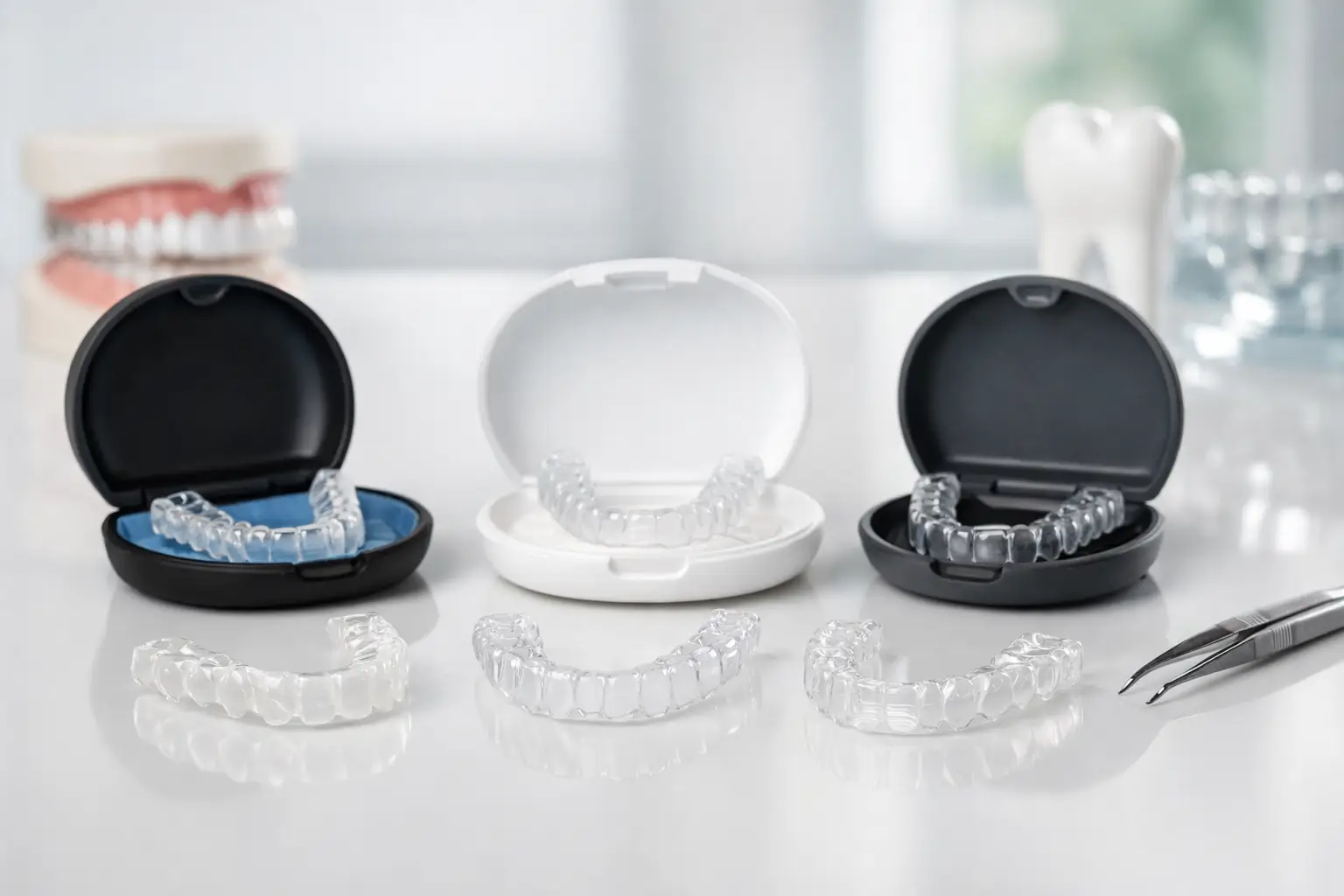

A clear aligner case can look straightforward on the screen and still lose momentum in the chair. The usual reasons are familiar: trays that do not fully seat, upper and lower arches progressing at different rates, and refinements that add months to treatment. That is exactly why being compatible with all aligner brands matters. When an adjunctive appliance can work across existing systems, clinicians gain a practical way to improve force delivery, case control, and treatment speed without rebuilding their workflow around a new vendor.


What compatible with all aligner brands actually means
For orthodontists and dentists, compatibility is not a marketing extra. It is an operational advantage. If a device is compatible with all aligner brands, it should integrate into treatment regardless of which aligner manufacturer produced the trays. That means the clinician does not need to switch aligner providers, alter established lab relationships, or limit use to a narrow case mix. This matters because most practices do not run on a single perfect protocol. They balance case complexity, turnaround times, pricing, preferred software, and patient expectations. Some offices use one aligner brand for comprehensive cases and another for more limited movements. Others inherit transfer patients already in treatment with a different system. In those realities, compatibility creates flexibility without sacrificing control. A universal enhancement appliance should also fit into the records and fabrication process clinicians already use. Digital setups, plaster models, and existing aligner inputs all need to support straightforward case integration. If compatibility exists only in theory but creates friction at the ordering or delivery stage, the value drops quickly.Why universal compatibility changes the economics of treatment
The most immediate gain is efficiency. A practice that can keep its preferred aligner partners while adding a treatment-enhancing appliance avoids retraining staff, renegotiating supply decisions, and rebuilding patient communication around a new primary system. The clinical team keeps what already works and upgrades performance where cases tend to stall. That difference is larger than it sounds. Every time a practice changes core aligner systems, there is a cost in time, consistency, and confidence. Doctors have to relearn nuances. Staff have to adapt instructions and follow-up protocols. Patients may notice differences in fit, wear schedules, or expectations. A device that works across brands protects continuity. There is also a referral benefit. Specialists and general dentists working together often do not share the same aligner preferences. If an appliance is truly universal, it becomes easier to coordinate treatment without forcing either side to abandon established systems. That makes adoption more realistic in multidisciplinary workflows.Compatible with all aligner brands and better case control
Compatibility matters most when it improves results, not just logistics. In aligner therapy, one of the biggest challenges is maintaining consistent force application as treatment progresses. Small variations in fit can reduce tracking. Once tracking slips, movement becomes less predictable, seating gets harder, and refinements become more likely. An adjunctive appliance designed to enhance aligner performance can help address that chain reaction. By supporting improved tray seating and more controlled force expression, it strengthens the original treatment plan instead of competing with it. That distinction is critical. Clinicians do not need another system layered on top of aligners that creates competing mechanics. They need an integrated way to help the aligners do their job more effectively. Jaw synchronization is another major issue. In many clear aligner cases, upper and lower arches do not progress at the same pace. That can complicate interarch coordination and extend treatment even when individual tooth movements appear manageable. A compatible appliance that supports synchronized progression gives the provider a more stable path to finishing on schedule.The clinical advantage is not just speed
Treatment acceleration gets attention for good reason. Patients want shorter treatment time, and practices benefit when cases move more efficiently. But speed without control is not a clinical win. The stronger value is accelerated movement with improved predictability. That is where universal compatibility becomes especially useful. Because the appliance can be added to different aligner systems, doctors can apply the same performance-enhancing principle across a broad patient base. Instead of reserving improved control for one brand or one subset of cases, the practice can build a more consistent standard of care around treatment efficiency and monitoring. There are trade-offs, of course. Not every case needs an adjunctive solution. Mild movements with excellent compliance may progress well without added intervention. Some clinicians may prefer a more selective protocol, using enhancement only when the risk of tracking loss, delayed seating, or arch desynchronization is higher. That does not weaken the compatibility argument. It strengthens it, because the clinician remains in control of when and where the appliance adds value.What this means for patient experience
Patients do not usually ask whether an appliance is compatible with all aligner brands. They ask why treatment is taking longer than expected, why trays suddenly feel harder to seat, or why refinements were needed after they followed instructions. Compatibility matters to patients because it gives their provider more ways to keep treatment on track. When aligners seat more effectively and forces are expressed more consistently, the treatment experience tends to feel more stable. Patients are less likely to feel that progress has slowed for no clear reason. They also gain confidence when their provider can enhance treatment without disrupting the system they already started with. This is especially relevant for transfer cases or patients who are already committed to a specific aligner brand. If the clinician can improve outcomes without changing the core aligner platform, the path forward becomes simpler. That simplicity supports acceptance.A better fit for modern orthodontic workflows
The future of aligner care is not about forcing every case into one closed ecosystem. It is about building smarter layers of control around the systems clinicians already use. Practices need tools that fit digital workflows, support custom fabrication, and work with treatment monitoring rather than against it. A product like SyncSplint reflects that direction. The value is not only that it is compatible across major aligner brands. The real advantage is that compatibility allows the appliance to function as a universal performance layer - one that supports faster movement, improved seating, synchronized arch progression, and more predictable finishing. For the clinician, that means fewer compromises. You do not have to choose between your preferred aligner vendor and a stronger treatment protocol. You do not have to give up workflow familiarity to gain better biomechanics. You do not have to reserve acceleration and control for only one brand population.How to evaluate a universal aligner enhancement appliance
Clinicians should look past broad claims and ask practical questions. Does the appliance integrate cleanly with digital setups and existing records? Can it be ordered from models or aligner inputs already available in the practice? Does it support measurable improvements in aligner seating, movement progression, and jaw coordination? And just as important, does it make treatment more predictable in a way that reduces avoidable delays? A truly useful universal solution should lower friction, not add it. If adoption requires excessive case redesign or major workflow disruption, the compatibility benefit is diluted. The best systems expand control while preserving what already works inside the practice. It is also worth assessing where the appliance delivers the most value. Complex movements, delayed tracking, difficult seating, and interarch timing issues are obvious candidates. But some clinicians may find that broader use creates more consistent performance across the full aligner program. The right threshold depends on the practice model, patient base, and tolerance for refinements.Why this matters now
Clear aligner therapy is no longer defined only by who manufactures the trays. Competitive advantage is shifting toward how effectively clinicians can manage movement, timing, and finishing across different systems. Universal compatibility is part of that shift because it frees treatment enhancement from brand lock-in. For providers, that creates a more resilient model. You can preserve supplier flexibility, maintain clinical preferences, and still deliver a higher-performance aligner protocol. For patients, it increases the odds that treatment feels efficient, controlled, and worth the commitment. The strongest orthodontic tools are the ones that improve outcomes without forcing unnecessary change. If an appliance is compatible with all aligner brands and clinically designed to accelerate movement, improve seating, and synchronize treatment progress, it is not just convenient. It is the kind of upgrade that makes modern aligner care more precise, more predictable, and better prepared for what patients expect next.