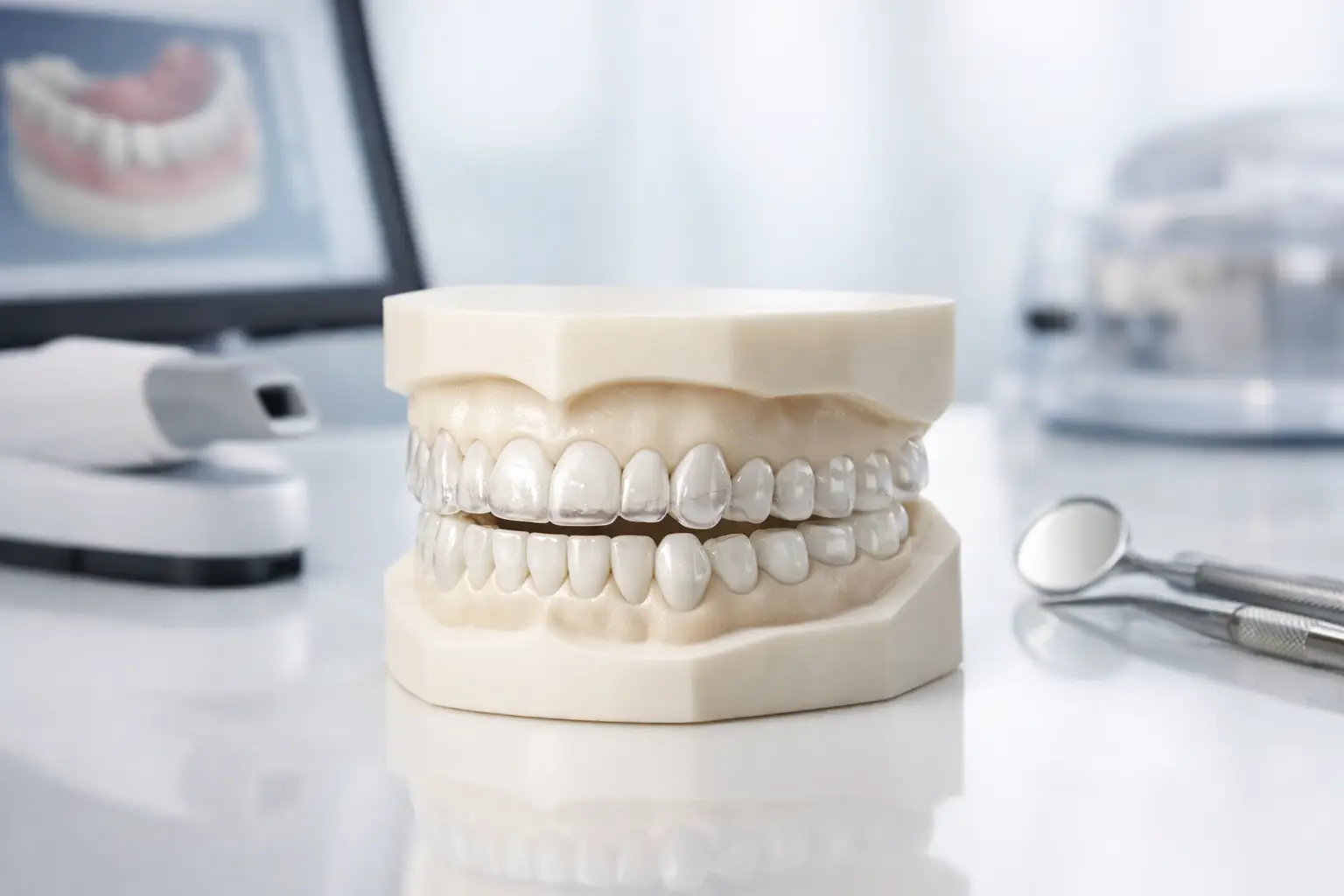

A digital model orthodontic appliance is no longer a niche add-on for complex cases. It is becoming a practical control layer for clinicians who want more predictable aligner tracking, better force expression, and fewer slowdowns between planned movement and what actually happens in the mouth.
That shift matters because clear aligner treatment is only as good as its execution. Digital planning has advanced quickly, but many practices still face the same friction points chairside - incomplete seating, lagging arches, delayed tracking, and treatment plans that lose momentum when upper and lower progress fall out of sync. When an appliance is designed directly from a digital setup or model, it can close part of that gap between virtual intent and clinical reality.


What a digital model orthodontic appliance actually means
In practical terms, a digital model orthodontic appliance is an appliance fabricated from a patient’s digital records rather than relying only on conventional physical impressions and manual analog workflows. The source may be an intraoral scan, a digital setup, a model derived from aligner data, or a converted plaster model. The point is not just digitization for its own sake. The point is precision, repeatability, and a tighter connection between appliance design and the planned biomechanics of treatment. For orthodontists and dentists already delivering aligner therapy, this approach fits naturally into modern case management. The appliance can be designed around the exact tooth positions, arch form, and treatment staging that the case requires. That creates more control over how forces are applied and how the patient progresses through each phase. This is where digital workflows become clinically meaningful. Better data in does not automatically guarantee better treatment out, but it gives the clinician a stronger foundation for custom fabrication, progress monitoring, and intervention before small tracking issues become larger delays.Why digital model orthodontic appliance design matters in aligner cases
Aligners are efficient, accepted by patients, and highly scalable in practice. But they are also sensitive to force delivery and compliance. When movement lags, clinicians often compensate with refinements, extended wear, auxiliaries, or revised staging. Those tools help, but they also add time and variability. A digital model orthodontic appliance can improve this in a few distinct ways. First, it can support aligner seating more effectively, which is often the difference between planned movement and stalled movement. Second, it can help direct force more consistently across stages of treatment. Third, it can improve synchronization between the arches, which is an underappreciated reason some cases start to feel inefficient. For providers, the value is straightforward: more control means fewer surprises. For patients, the value is just as clear: treatment that feels more decisive, with less time lost to preventable setbacks.From digital setup to clinical performance
The strongest argument for digitally derived appliances is not convenience alone. It is the ability to translate planning into action with fewer compromises. In a conventional workflow, there is more room for distortion, remakes, and variability introduced by manual handling. In a digital workflow, design parameters are easier to standardize and easier to reproduce. That does not mean every digital appliance is automatically superior. Quality still depends on the underlying treatment plan, the fabrication process, and the clinician’s understanding of biomechanics. A poorly designed appliance built from a scan is still a poorly designed appliance. But when the planning is sound, digital model fabrication gives clinicians a more reliable path from records to delivery. This becomes especially valuable in cases where progress needs to be accelerated without surrendering control. Faster treatment is attractive, but speed without predictability creates more corrections later. The better strategy is controlled acceleration - moving the case forward while protecting tracking, fit, and staging accuracy.The role of appliance integration, not replacement
One of the biggest misconceptions in orthodontic technology is that every improvement requires a full workflow change. Most clinicians do not want to abandon their aligner system, change vendors, or rebuild their process around a new platform. They want a tool that integrates with what already works and strengthens the weak points. That is exactly where a digital model orthodontic appliance makes sense. It does not need to compete with the aligner system itself. It can function as an enhancement layer that works alongside existing treatment protocols, using the same digital records and fitting into the same case progression. That matters commercially, but more importantly, it matters clinically. Adoption is easier when the technology supports current systems rather than disrupting them. If the appliance can be ordered from digital setups, aligner inputs, or existing models, it reduces friction for the practice and shortens the path to implementation.Better jaw synchronization is not a minor benefit
In many aligner cases, clinicians focus heavily on individual tooth movement while underestimating the effect of unsynchronized upper and lower progress. When one arch tracks well and the other lags, the treatment plan starts to drift. That drift can affect occlusal relationships, staging confidence, aligner fit, and patient perception of progress. A digitally designed appliance that supports synchronized advancement can help stabilize that relationship. This is not just about making treatment look smoother on paper. It is about preserving the logic of the original setup so that each stage continues to build on the last one instead of forcing corrective detours. For growing practices and busy clinicians, this kind of consistency has real operational value. Fewer disruptions mean fewer unnecessary refinements, more predictable review appointments, and a treatment experience that feels controlled from start to finish.What clinicians should evaluate before using one
Not every case needs the same level of intervention, and not every patient responds the same way. That is why clinicians should assess a digital appliance in terms of function, not hype. The first question is whether it improves force application in a way that matches the treatment objective. The second is whether it improves aligner seating and tracking enough to justify its use. The third is whether it fits into the practice workflow without creating more complexity than it removes. Material quality, fabrication precision, and turnaround time all matter. So does the quality of the input data. If scans are incomplete or the digital setup is poorly staged, the appliance will inherit those weaknesses. Digital precision starts with disciplined records. Patient communication also matters. Adults and teens do not need a lecture on appliance engineering, but they do need to understand the benefit. If the appliance helps treatment move faster, fit better, and stay on track, that message is easy to communicate and easy to appreciate.Why this approach is gaining momentum
Orthodontics is moving toward treatment systems that are more connected, more data-driven, and more accountable to measurable progress. Clinicians increasingly want tools that do more than look advanced. They want technologies that reduce variability and improve outcomes in ways patients can actually feel. That is why the digital model orthodontic appliance is gaining traction. It answers a practical need inside modern aligner therapy. It helps bridge the gap between digital planning and biologic response. It supports treatment acceleration without asking clinicians to sacrifice control. And it fits the direction the specialty is already moving - toward integrated solutions that make treatment more predictable, not just more digital. For practices that already rely on aligners, this is not a fringe idea. It is a smart next step. A company like SyncSplint has built its value around that reality: enhancing existing aligner systems with a clinically practical appliance that improves seating, synchronization, and treatment efficiency without forcing providers to change their core platform. The most valuable orthodontic technologies are usually the ones that solve familiar problems with greater precision. When a digital appliance helps a case track the way it was planned, that is not just innovation. That is better orthodontic control, and patients notice the difference.