
Refinement starts when the original aligner plan stops delivering exactly what the setup promised. For clinicians, that usually means extra scans, extra trays, extra chair time, and a patient who thought they were almost done. If you want to know how to shorten orthodontic refinements, the answer is not one trick. It is tighter control of fit, force, timing, and occlusal coordination from the beginning of treatment.
Why refinements drag on
Most refinement phases are not caused by a single major error. They are usually the result of small inefficiencies that compound over time. A slight lag in tracking turns into a missed rotational expression. A posterior settling issue changes the way forces are distributed. Upper and lower arches progress at different rates, and what looked manageable at tray 12 becomes more complex by tray 28.
Clear aligner treatment is highly dependent on force delivery being consistent at every stage. When the aligner does not seat completely, when attachment engagement is reduced, or when the arches are not moving in sync, the digital plan and the clinical result begin to separate. Refinement is the effort required to close that gap.
That is why shortening refinements is really about reducing the gap before it becomes a second treatment phase.
How to shorten orthodontic refinements in real cases
The fastest way to reduce refinements is to treat predictability as the central objective, not just total tray count. A shorter initial series does not help if it leads to multiple rounds of correction. The better strategy is to build a workflow that maintains tracking, supports complete aligner seating, and keeps both arches coordinated as treatment progresses.
This starts with case selection and setup design, but it does not end there. Midcourse control matters just as much as planning. Clinicians who consistently reduce refinements tend to monitor the same pressure points: seating, compliance, attachment integrity, interarch coordination, and early signs of lag.
When those variables are controlled, treatment acceleration becomes clinically useful rather than cosmetic. Faster movement only helps if it remains accurate.
Start with realistic staging
Overstaged movements create avoidable refinement. This is especially true in rotations, extrusions, root control, and mixed movements that depend on precise aligner engagement. If the setup asks for more than the biology and appliance can reliably deliver, the case will likely finish with residual discrepancies.
Conservative staging often outperforms aggressive staging because it preserves tracking. The trade-off is obvious: a more moderate setup may increase the planned number of stages. But if it reduces the need for an additional refinement series, total treatment time often improves.
For providers focused on efficiency, the right question is not how many trays are in the first round. The right question is whether each tray has a high probability of expressing the programmed movement.
Protect aligner seating at every step
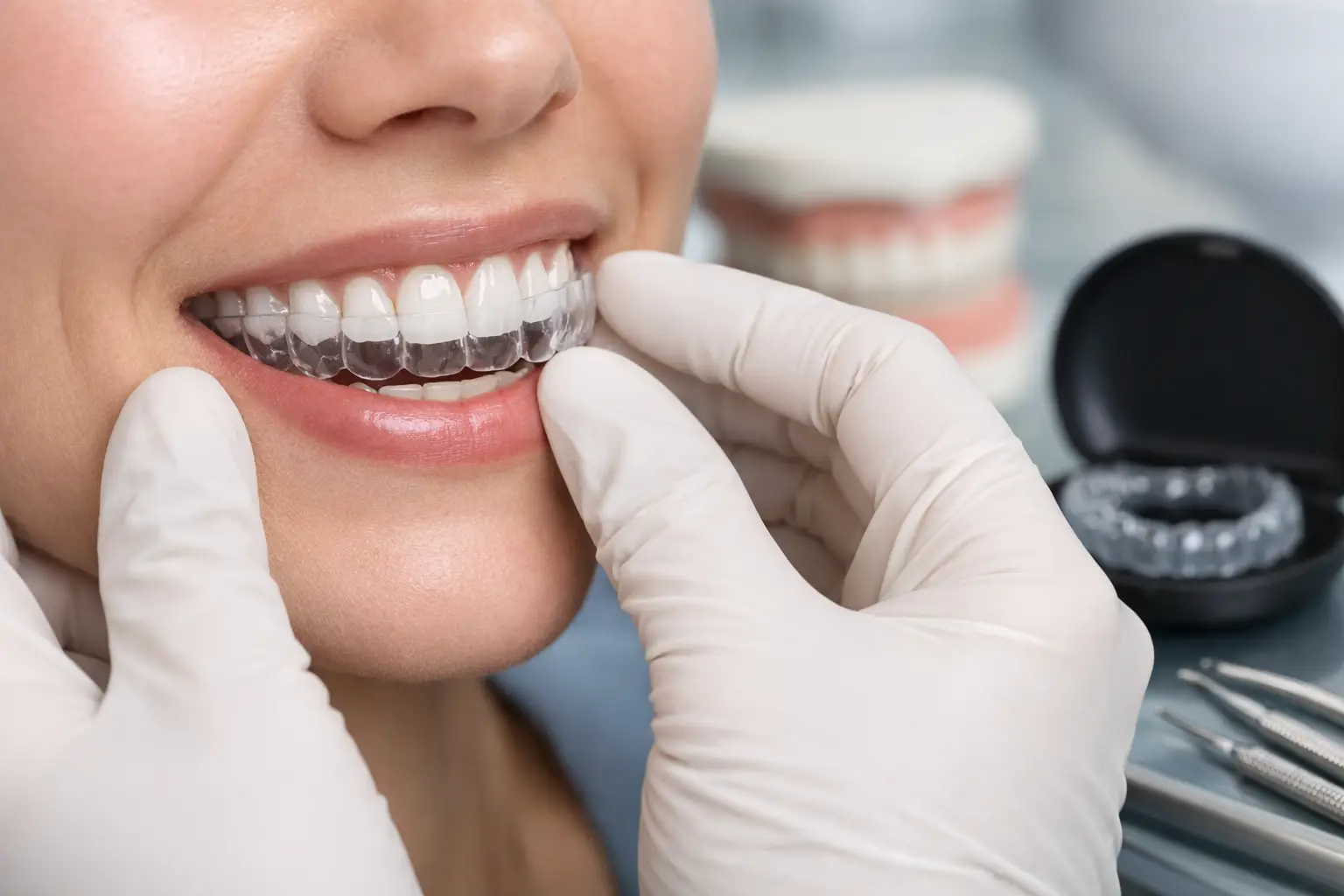
Poor seating is one of the earliest predictors of future refinement. If the tray is not fully engaged, the programmed force system is already compromised. Clinicians often see this first as a small halo at the incisal edge or a stubborn area of incomplete adaptation around a rotated tooth. Left alone, that minor discrepancy can spread through the next several stages.
Patients need simple, repeatable seating protocols. They also need to understand that tray wear is not enough if the aligner is not fully adapted. Better seating improves force delivery, supports attachment engagement, and reduces movement loss between stages.
This is where an adjunctive appliance can change the refinement equation. A system designed to improve fit and reinforce force application can help maintain treatment accuracy across the series, especially in cases where seating inconsistency would otherwise create lag. For practices looking for a practical advantage without changing aligner brands, this kind of integration is one of the most direct paths to fewer refinements.
Watch arch coordination, not just individual tooth movement
One of the most overlooked reasons refinements continue is unsynchronized jaw progress. The teeth may be moving, but the arches are not progressing together in a controlled way. By the time the patient reaches the end of the initial series, the provider is correcting not just individual misalignment but a timing problem between upper and lower treatment.
Jaw synchronization matters because occlusion influences how aligners seat and how movement expresses. If one arch advances ahead of the other, interferences can develop, seating may worsen, and finishing becomes less predictable. This is especially relevant in cases where bite changes are part of treatment, not just crowding relief or alignment.
A workflow that supports synchronized upper and lower progression can shorten the finishing phase significantly. It reduces the number of late-stage corrections that appear small on a scan but require another set of trays to resolve clinically.
Refinement reduction depends on earlier intervention
The worst time to think about refinement is when the first series is already complete. By then, the inefficiencies are established. The better approach is to identify tracking loss while it is still small enough to correct without resetting the case.
That means reviewing fit actively during treatment rather than assuming wear time alone will solve the issue. It also means replacing lost or broken attachments promptly, reassessing movement expression at regular intervals, and being willing to pause progression when the tray is not tracking as planned.
There is a balance here. Overreacting to every minor discrepancy can slow treatment unnecessarily. Underreacting creates a larger refinement burden later. The strongest clinical workflows recognize which deviations are biologically acceptable and which are signs that force delivery has already drifted off course.
Improve compliance by making progress easier
Patient compliance is often framed as motivation, but in many aligner cases it is really a usability problem. If trays are hard to seat, if progress feels inconsistent, or if the patient senses that the fit is getting worse, compliance usually drops. That drop then increases the likelihood of refinement.
A better treatment experience supports better treatment behavior. When aligners seat more easily and progression feels controlled, patients are more likely to follow instructions consistently. For adults managing treatment around work and social routines, and for teens who need clearer structure, that practical difference matters.
This is one reason product design matters in orthodontic efficiency. The best adjunctive tools do not add complexity for its own sake. They improve the mechanics that determine whether the digital plan becomes a clinical result.
Use force management as a refinement strategy
Refinement is often presented as a planning problem, but it is just as much a force management problem. Teeth do not respond to software. They respond to applied force, anatomical limits, and biologic variability. If the force system is weak, inconsistent, or poorly expressed, the setup will not finish cleanly.
That is why clinicians who want to shorten refinements focus on more than scan quality and staging. They focus on how to improve actual force application in the mouth. Better seating, stronger engagement, and synchronized progression all contribute to better force expression.
In practical terms, this means that an appliance designed to accelerate tooth movement while improving aligner adaptation can have a meaningful effect on finishing predictability. SyncSplint is built around that exact clinical advantage: accelerating treatment, improving force application, and supporting synchronized progress without requiring a switch from the provider's current aligner system.
How to shorten orthodontic refinements without adding workflow friction
Any refinement-reduction strategy has to work in a real practice. If it adds too many steps, too much training, or too much disruption to an established aligner workflow, adoption will be limited. The most effective systems are the ones that integrate with existing protocols and strengthen control without forcing the provider to rebuild treatment delivery from scratch.
That is the practical threshold. Clinicians need fewer corrections, fewer delays, and more predictable finishing, but they also need a solution that fits inside a busy restorative or orthodontic schedule. Integration matters almost as much as performance.
For that reason, the most valuable refinement strategy is usually not a dramatic change in philosophy. It is a better layer of control added to the protocol you already use.
Refinement will never disappear entirely because biology is not perfectly programmable. But when fit is stronger, force is better expressed, and upper and lower treatment stay synchronized, refinements stop being the default ending to aligner therapy. They become what they should be - a limited adjustment, not a second phase that steals time from the patient and efficiency from the practice.
The clinicians who finish faster are usually the ones who plan for the finish from tray one.

