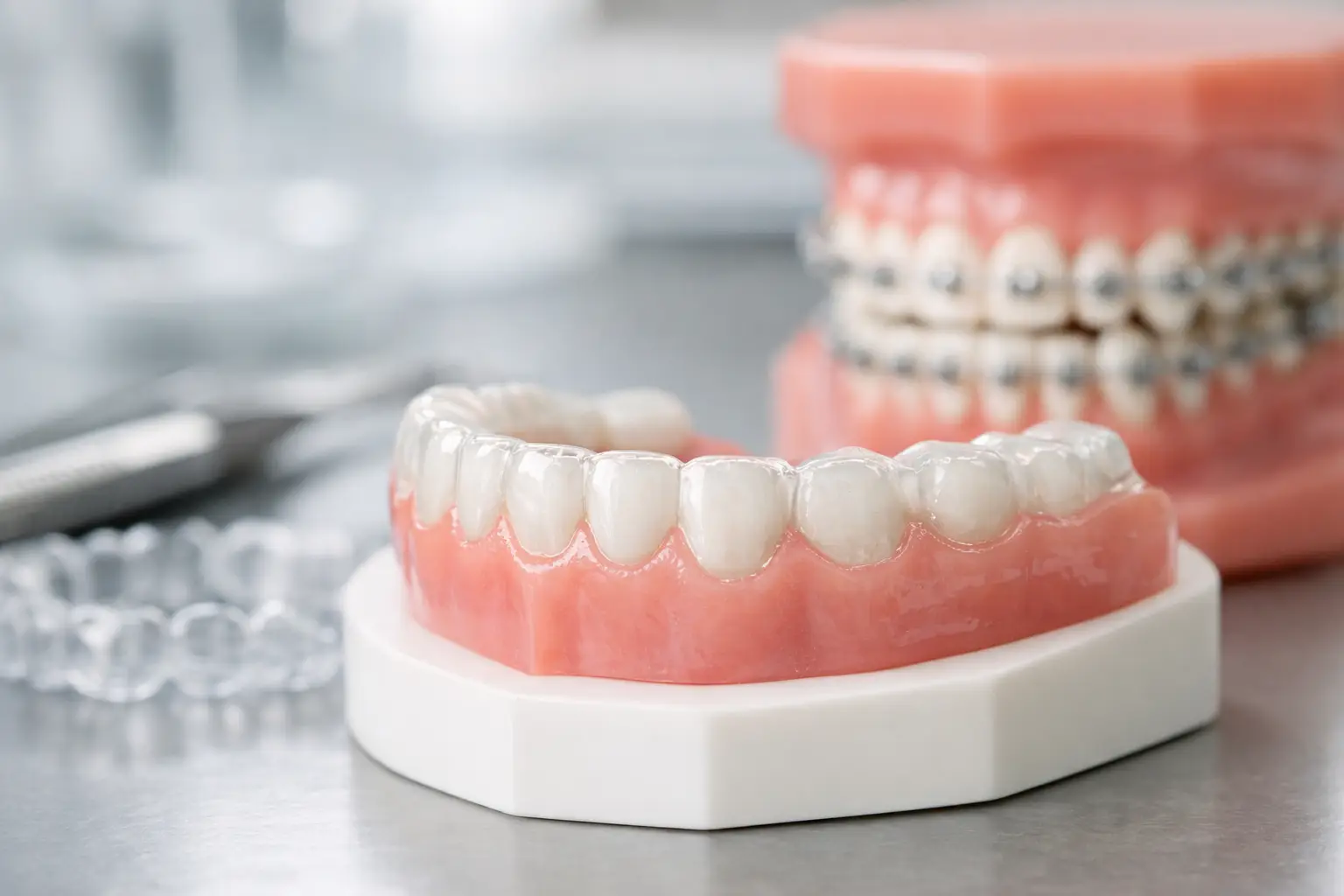

A case looks perfect on screen right up until the last stages fail to track. That is where a final setup orthodontic appliance becomes more than a finishing accessory. In clear aligner treatment, it can be the difference between a digital plan that stays theoretical and one that delivers precise, controlled tooth movement in the mouth.
For clinicians, the issue is rarely the setup alone. It is force expression, aligner seating, upper and lower arch coordination, and whether the patient can actually carry the plan through without drift. A final setup orthodontic appliance matters because finishing is where small discrepancies become visible, stubborn, and expensive in chair time. If you want treatment acceleration and more predictable outcomes, the appliance used at this stage has to do more than hold position. It has to improve how the case expresses the setup.


Why the final setup stage creates problems
The final phase of aligner treatment is supposed to be the easiest part. Most major movements are complete, the patient is invested, and the digital model suggests only minor corrections remain. Clinically, that is often when friction enters the workflow. Tiny rotational errors, incomplete seating, posterior settling issues, and arch coordination gaps show up late. These are not dramatic failures, but they are the kind that extend treatment by months. A patient who expects refinement-free finishing may suddenly need additional trays. A provider who planned efficient delivery now has more visits, more monitoring, and less predictability. This is why the last phase deserves its own strategy. A finishing protocol that relies only on passive wear can work in simple cases, but not every case behaves that way. When the goal is controlled force delivery and synchronized progress across both arches, the final appliance should actively support the digital endpoint.What a final setup orthodontic appliance actually does
A final setup orthodontic appliance is designed from the approved treatment setup or near-final stage to help teeth express the intended position with greater consistency. In practical terms, it supports aligner seating, improves force application, and helps the arches finish in coordination rather than as two separate timelines. That distinction matters. In aligner therapy, one arch may appear to progress faster than the other. The result is a mismatch in intercuspation, delayed finishing, or repeated refinement requests. An appliance built around the final setup can help synchronize these relationships while reinforcing the intended occlusal and positional outcome. For the clinician, that means fewer compromises between what the software planned and what biology delivered. For the patient, it often means a clearer path to the finish line with less uncertainty about whether more trays are coming.Final setup orthodontic appliance in aligner workflows
The strongest value of a final setup orthodontic appliance is not that it replaces aligners. It is that it strengthens the aligner workflow without forcing a change in brand, lab relationship, or planning philosophy. That is a critical advantage in modern orthodontic practice. Most providers already have established systems, preferred digital protocols, and vendor commitments. They do not want to rebuild their process to gain more control at the finishing stage. They want an appliance that integrates into what they already use and improves outcomes where aligners alone can become less efficient. In that setting, a final setup appliance becomes a performance layer. It can help seat trays more completely, maintain treatment momentum, and reduce the lag that develops when minor discrepancies accumulate. This is especially relevant in cases where treatment speed matters but predictability matters more. A faster finish is useful only if it is also stable, coordinated, and clinically accurate.Where clinicians see the biggest benefit
The biggest gains usually show up in cases that are almost done but not quite delivering the planned final position. These are the cases that tempt providers into accepting a near-finish because the remaining corrections look small on paper. In reality, those final details shape patient satisfaction and treatment quality. Rotations that remain partially expressed, anterior relationships that are close but not precise, and posterior contacts that need better coordination all benefit from more directed control. The appliance can also help in cases where aligners are not fully seating despite patient compliance, because poor seating at the end of treatment often means the finishing forces are no longer being delivered as planned. This is where a product-centered finishing strategy stands apart from a passive retention mindset. The objective is not simply to hold the current position. The objective is to complete the setup.Why force control matters more than appearance
Many finishing-stage decisions are driven by how close the smile looks to complete. That can be misleading. A case can appear acceptable from the front while still lacking proper intercuspation, coordinated arch timing, or complete expression of programmed movement. A final setup orthodontic appliance works best when clinicians view it as a force management tool rather than a cosmetic checkpoint. The key question is not whether the patient looks close to done. It is whether the teeth are still receiving the right forces, in the right direction, with enough consistency to achieve the planned endpoint. That shift in thinking is valuable because it changes how finishing is managed. Instead of reacting to end-stage tracking problems after they become obvious, the provider can use the appliance proactively to preserve momentum and accuracy.Integration without changing aligner systems
One of the practical barriers to adopting any adjunctive appliance is disruption. If a tool requires a new planning ecosystem, retraining, or a change in aligner supplier, many practices will avoid it regardless of its clinical merit. That is why compatibility matters. An appliance that works alongside major aligner systems is easier to implement, easier to explain to staff, and easier to position within an existing treatment protocol. It supports the way modern practices actually operate. This integration model also improves case selection. Providers can reserve the appliance for finishing challenges, use it in cases that need jaw synchronization, or build it into a broader treatment acceleration strategy without altering the core aligner workflow. That flexibility is not a minor operational perk. It is what makes advanced finishing control scalable in a busy practice.The patient side of the equation
Patients do not usually ask for a final setup orthodontic appliance by name. They ask why treatment is taking longer than expected, why the trays no longer seem to fit as well, or why they were told they were almost done and are now discussing refinements. From the patient perspective, finishing problems feel disproportionate. After months of compliance, even small delays can reduce confidence. An appliance that supports seating, synchronization, and controlled finishing gives the provider a stronger answer than simply extending aligner wear and hoping the case settles. That conversation matters. Patients respond well to solutions that are clear, efficient, and tied to a defined outcome. When the finishing phase is managed with a tool designed around the actual setup, the treatment story stays credible. Progress still feels intentional.When it may not be necessary
Not every case requires a dedicated finishing appliance. Mild cases with excellent compliance, efficient tracking, and stable arch coordination may finish predictably with the original aligner sequence alone. Overprescribing adjunctive tools does not improve efficiency. But the threshold for using one should not be limited to obvious failure. If the provider sees signs of delayed seating, uneven arch progress, or persistent discrepancies between the digital plan and clinical expression, intervening earlier usually protects both timeline and result. That is the trade-off. Waiting may keep the protocol simpler, but it can also allow minor errors to compound. Adding a final setup appliance introduces another step, yet it often reduces the hidden costs of prolonged refinement.A smarter finishing protocol
The future of aligner therapy is not just better planning software. It is better execution between planned stages and clinical reality. That is exactly where a final setup orthodontic appliance delivers value. For practices focused on treatment acceleration, predictability, and integrated workflows, the appliance should be viewed as a clinical control tool. It reinforces the digital endpoint, improves seating and force expression, and helps synchronize treatment progress when the last stage starts to drift. That is why systems such as SyncSplint fit so naturally into modern aligner care. They do not ask clinicians to abandon what already works. They make the finishing phase work harder. When the setup is right, the final stage should not be left to chance. The best finish comes from controlling the details that usually extend the case.